
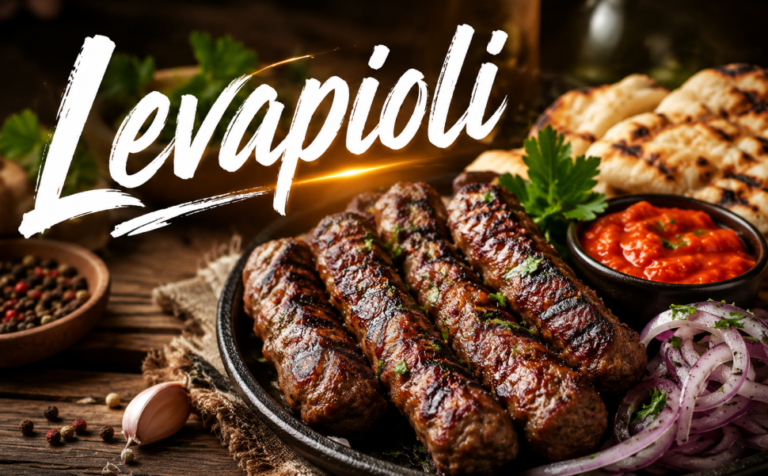
One says Levapioli is Balkan. Grilled meat, beef and lamb, roots going back generations. Fine — except the next article I read insists Levapioli is Italian, with a whole regional breakdown (Northern Italy does it with cheese, apparently, Southern Italy adds chili). A third one drops the meat angle entirely and calls Levapioli a “superfood” with antioxidants and gut-health benefits. Somewhere in there was also a claim that Levapioli refers to a furniture design concept involving pivoting hinges.
None of these agree with each other. Not on the country, not on the ingredients, not even on whether Levapioli is food. That’s usually a sign something’s off. Real dishes — even obscure regional ones — have a consistent story. You can trace ćevapi back through Balkan food history without much trouble. Levapioli doesn’t have that. It has five different stories that were clearly written by five different people who had never heard of the word before typing the article.
Conflicting Origin Stories
Let’s line up what different sites claim about Levapioli side by side:
- Site A: Levapioli is a traditional Balkan grilled meat dish, close cousin of ćevapi.
- Site B: Levapioli is an Italian regional recipe, with distinct Northern, Central, and Southern variations.
- Site C: Levapioli is a Mediterranean superfood ingredient with health benefits.
- Site D: Levapioli is a fusion dish combining stuffed dough with seasoned meat.
- Site E: Levapioli is a mechanical/design term unrelated to food at all.
If Levapioli were a real, documented dish, you wouldn’t see this kind of scatter. A word that means five unrelated things across five sites, published within months of each other, is a strong sign the word was manufactured rather than inherited from tradition.
How the Trend Started
My best guess: Levapioli is what people in SEO circles call a “keyword-first” topic. Somebody notices a term getting search volume — maybe from a typo, a mistranslation, or one AI tool hallucinating a dish name — and a bunch of content sites rush to write about Levapioli before anyone checks if it’s real. Since there’s nothing real to report, the details get made up, and every site makes up something slightly different.
I’m not guessing blindly here, either — one of the articles I read about Levapioli basically admits it outright. It calls Levapioli “a growing food concept or keyword trend” and pitches it to bloggers as “a golden opportunity to rank on Google quickly.” That’s about as close to a confession as you’ll get.
This is a pattern worth understanding, because Levapioli isn’t the first invented keyword and it won’t be the last. Search engines reward fresh, low-competition terms. If a word starts trending — for any reason, even a mistake — there’s a financial incentive for content sites to fill that gap fast, accuracy be damned. Levapioli just happens to be a particularly clean example, because the contradictions are so obvious once you read more than one source.
The Real Dish Behind the Name
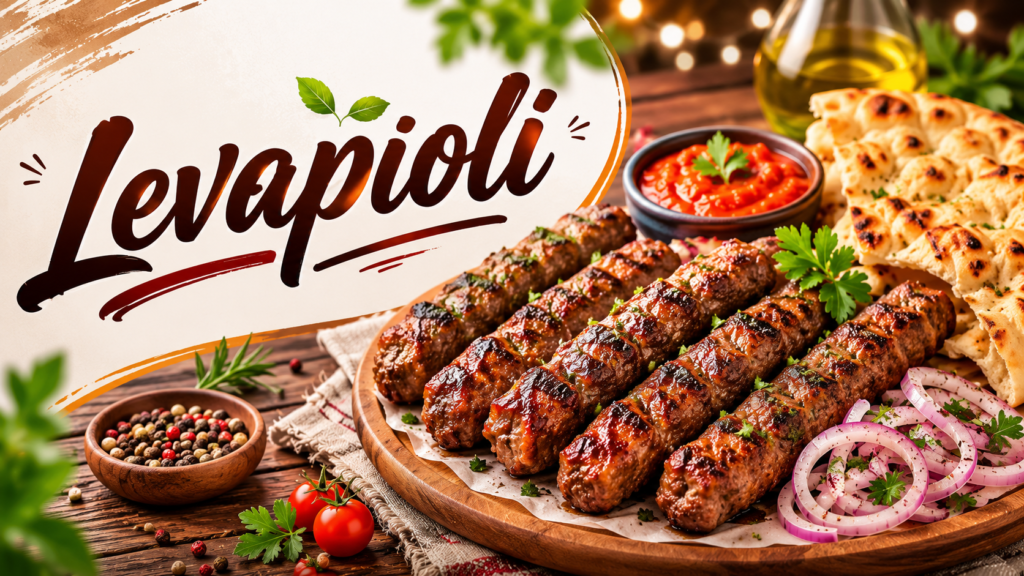
Let us get rid of the confusion. Most of these descriptions are talking about the real food. Ćevapi, sometimes people write it as ćevapčići. This is a dish that is made from minced meat and it is grilled. It comes from the Balkans, from Bosnia and Herzegovina, Serbia and Croatia. It is very likely that the person who first used the word Levapioli was actually talking about ćevapi. They probably got the name wrong because they did not hear it correctly or they used a computer tool that mixed up two words. The word they used is probably describing ćevapi.
A few things that actually check out about ćevapi, unlike Levapioli:
- Small grilled sausages, usually a beef and lamb mix
- Kept simple — salt, pepper, garlic, sometimes a pinch of baking soda for texture
- Cooked over charcoal or open flame
- Served in warm flatbread (lepinja or somun) with raw onion, kajmak, and ajvar
- A genuine part of Balkan social life — weekend grills, family gatherings, that kind of thing
- Taken seriously enough that Bosnia has pushed for UNESCO recognition of it as cultural heritage
If you landed on “Levapioli” while trying to find a grilled Balkan meat recipe, ćevapi is almost certainly what you actually wanted.
Real Levapioli Recipe: Ćevapi
For about 20 pieces:
- 500g minced beef
- 300g minced lamb (or just use all beef)
- 2 garlic cloves, minced
- 1 tsp salt
- ½ tsp black pepper
- ¼ tsp baking soda
- 2 tbsp water (sparkling if you have it)
How to make it:
Mix everything except the water first. Then add the water and knead by hand for a good five to eight minutes — longer than feels necessary — until the mixture gets sticky and starts holding together on its own. Cover it and let it rest in the fridge for at least two hours; overnight if you can manage it, the texture’s better.
Shape into small finger-sized sausages, roughly 7-8cm. Grill on high heat, turning often, for six to eight minutes — you want the outside charred and the inside still juicy. Serve immediately in warm flatbread with onion, kajmak, and ajvar.
If any article calling itself a Levapioli recipe skips the resting time or the baking soda, that’s another small sign it was written without ever actually cooking the dish.
Regional Ćevapi Styles
Unlike Levapioli, ćevapi actually has documented regional differences you can verify — the kind of detail that only exists when a dish has been cooked and passed down for generations, not invented for a blog post last month.
- Bosnian ćevapi, especially from Sarajevo, tend to be the smallest and most tightly packed, often served ten at a time stuffed into a single somun, with raw onion piled on top and kajmak on the side. Sarajevo grill houses are famously particular about this — some refuse to serve fewer than a certain number per portion, treating it almost like a ritual.
- Serbian ćevapi are a little bigger. People usually serve them with a bread called lepinja. This bread is flat and soft. They also serve ćevapi with onions and peppers. The toppings can be different depending on where you’re
- In Belgrade they like to make ćevapi a bit spicy. They add paprika to the meat.
- Croatian ćevapi are different. The ones from Slavonia are special. They add a bit of smoked bacon fat to the meat. This makes them taste richer. They also grill them for a bit longer. This makes them firmer to bite.
- Macedonian ćevapi are made with meat that is not ground too fine. They do not use baking soda. This makes them denser and heavier. Some people like them this way. They think it is better. Serbian ćevapi and Croatian ćevapi are different, from North ćevapi. Each place has its way of making ćevapi.
None of these regional details show up for Levapioli anywhere, because nobody has actually cooked it across generations to develop them. That absence is itself evidence.
Tips for Grilling Ćevapi, at Home
- Here are some tips to make your Ćevapi turn out great:
- * Don’t rush the resting time. The Ćevapi mixture needs to chill in the fridge to become firm. If you skip this step your Ćevapi will likely fall apart when you grill them.
- * When shaping the Ćevapi, keep your hands moist. This will help them hold their shape better.
- The mixture is sticky by design — wetting your hands between pieces keeps it from clumping to your fingers instead of holding its shape.
- Use high, direct heat.Ćevapi cooks fast. Low heat dries it out before it chars properly; you want a hot grill and a short cook time.
- Don’t press down while grilling. Pressing squeezes out the juices that keep the inside tender — let it cook undisturbed and just turn it.
- Warm the bread separately. A cold flatbread against hot, juicy meat kills the whole experience. Warm it on the same grill for the last minute or two.
How to Spot a Fake SEO Trend
A few things I now check whenever a “trending” food or product name doesn’t ring a bell — the same checklist I used to figure out Levapioli:
- Does the origin story stay the same across sources? If every article names a different country, be suspicious, the way Levapioli’s origin keeps flipping between the Balkans, Italy, and the Mediterranean.
- Is there a real source anywhere? A cookbook, a cultural archive, a long-established regional publication — something older than a few months. Levapioli has none of these.
- Are the descriptions oddly vague? Lines like “a culinary journey through rich flavors” that could describe literally any dish are a tell. Real writing about real food gets specific fast. Most Levapioli articles read this way.
- Try it in the local language. If the term supposedly comes from Italy or the Balkans, search it in Italian or Bosnian. If native speakers have never heard of it, that tells you a lot — and that’s exactly what happens with Levapioli.
- Check publish dates. Fabricated keywords tend to cluster in a short window. Almost every Levapioli article appeared within the same several months, which lines up with a trend being manufactured rather than discovered.
Why Levapioli Matters
It’s tempting to treat Levapioli as a harmless curiosity — a funny made-up food word, no big deal. But the pattern behind it says something bigger about how information spreads online right now.
Search engines and AI tools both rely on the assumption that if enough sources say the same thing, it’s probably true. Levapioli breaks that assumption on purpose. It shows how easily a completely fictional topic can generate dozens of confident-sounding articles, get indexed, and start showing up in search results and AI-generated answers as if it were established fact. Someone asking an AI assistant “what is Levapioli” today might get a confidently wrong answer, built entirely from these contradictory sources, with no indication that the underlying premise is shaky.
That has real consequences. Health claims attached to Levapioli — antioxidants, digestion, heart health — aren’t backed by anything. If someone changed their diet based on those claims, they’d be acting on fiction dressed up as nutrition advice. Recipe instructions borrowed from a Levapioli article might waste someone’s ingredients on a dish invented by an algorithm rather than a chef. None of this is dangerous exactly, but it’s a small, real cost paid by anyone who trusted the content.
Levapioli in AI Search Results
Try asking a few different AI chatbots “what is Levapioli” and you’ll likely get a few different answers, sometimes even a mix of the Balkan and Italian versions blended into one confident paragraph. That’s not the AI making things up out of nowhere — it’s summarizing whatever it finds, and what it finds is a pile of contradictory blog posts, so the summary inherits the contradiction.
This is a useful thing to understand if you use AI tools for research on unfamiliar topics. An AI assistant is generally good at compressing information that already agrees with itself. It’s much weaker at flagging that the underlying sources disagree in the first place, unless it specifically checks multiple sources and compares them, the way this article did. A single confident-sounding paragraph from an AI chatbot can hide the fact that the topic underneath it is completely unsettled.
For a harmless case like Levapioli, the cost of this is small — maybe someone tries a recipe that doesn’t taste quite right, or repeats a fake fact at a dinner party. But the same mechanism applies to more serious topics too: medical questions, financial claims, historical events. When a topic is genuinely contested or thinly sourced, it’s worth doing what we did here — checking more than one source, looking for a consistent story, and treating suspiciously confident content with a bit of skepticism, whether it came from a blog or from an AI.
The Future of Levapioli
So where does Levapioli go from here? A few possibilities.
The most likely outcome is that Levapioli quietly fades. Most manufactured keywords have a short shelf life — the search volume spikes, a wave of content sites publish their versions, and then interest drops off once the novelty wears out. Without a real product, a real restaurant, or a real cultural community behind it, there’s nothing to sustain Levapioli long-term. In a year or two, it’ll likely be a footnote, another forgotten SEO experiment.
What’s more interesting, though, is what Levapioli signals about the near future of search and AI. As more people ask AI assistants direct questions instead of clicking through search results, fabricated topics like Levapioli have a much bigger shortcut to appear “true.” A chatbot may generate a confident answer from conflicting blog posts unless it verifies reliable sources.
Final Thoughts on Levapioli
For now, if you’re searching for Levapioli, the most reasonable conclusion is that you’re probably looking for ćevapi or related Balkan cuisine. Much of the online information about Levapioli should be approached with caution because there is no widely accepted definition. As always, verify claims using reliable sources before treating them as factual.
Over the next few years, search engines and AI companies are expected to improve how they detect thin or contradictory content built around invented keywords. Websites that publish accurate information, cite trustworthy sources, and acknowledge uncertainty are more likely to remain visible in both search results and AI-generated answers.
Levapioli FAQs
Is Levapioli a real dish?
No solid source confirms Levapioli as real. It looks invented, likely generated to chase search traffic.
What’s the real dish behind Levapioli?
Ćevapi, most likely — a well-documented Balkan grilled meat dish that most Levapioli articles seem to be describing without naming.
Why does every article describe Levapioli differently?
Because none of them are working from real information. Each site filled in the blanks on Levapioli on its own.
Are the health claims about Levapioli true?
Don’t take them seriously. There’s no actual research behind the antioxidant or digestive-health claims floating around for Levapioli — they’re not tied to any real study.
Will Levapioli become a real dish someday?
Possibly, though unlikely. Most invented keywords like Levapioli fade once search interest moves on, but language occasionally does absorb accidental inventions if enough people keep using them.
Should I avoid every article about Levapioli?
Not necessarily — but read them the way you’d read an anonymous online review. Cross-check any specific claim, especially health claims, against a source you actually trust before repeating or acting on it.
Is it safe to try cooking a Levapioli recipe from one of these sites?
Cooking-wise, probably fine, since most versions are just ćevapi with a different name attached. Just don’t expect the “traditional” backstory attached to the recipe to hold up to scrutiny