
Type “Messonde” into Google and you’ll notice something weird pretty fast. The results don’t agree. One page calls it a weather device. Another one links it to something that has basically nothing to do with measurement. A couple of pages honestly read like someone was just guessing and hoping it would stick.
So here’s the short version, before we get into anything else.
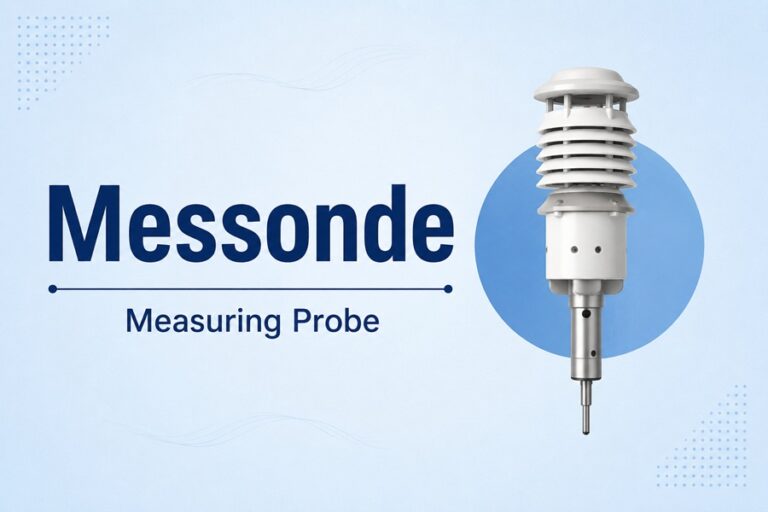
Messonde comes from German technical language, and it means a measuring probe. That’s really the whole thing. Not a philosophy. Not a business term. Not some vague modern concept. Just a piece of equipment that measures a physical condition and turns that into data someone can actually use.
Why the mess online, then? Mostly because of how content gets written around uncommon words. When a term is rare – especially a foreign one – some writers fill in the blanks with guesses instead of digging into where it actually comes from. Those guesses get published, other sites reword them, and pretty soon you’ve got half a dozen “definitions” for one word that, honestly, has a pretty clear meaning if you trace it back far enough.
This piece goes through what Messonde really refers to, where it comes from linguistically, how the tech behind it works, and why the term keeps popping up around weather, industry, and lab science.
What Does Messonde Actually Mean?
The word traces back to Messsonde in German, and breaking it apart tells you almost everything.
“Mess” has to do with measuring. “Sonde” refers to a probe – something used to explore or investigate an environment, usually one that’s hard to observe directly. Stick them together and you get a device whose entire job is measuring a physical condition and reporting on it.
That’s it, really. A Messonde isn’t one particular gadget you’d recognize on sight, the way “thermometer” instantly conjures an image. It’s more of a category. Could be a small sensor wired into something bigger. Could be a lab instrument. Could be part of a package hanging off a weather balloon several miles up. The shape changes. The job doesn’t.
What actually matters is the function – grab a physical measurement (temperature, pressure, humidity, whatever’s relevant) and make that data available to whoever, or whatever, needs it next.
Why German Technical Words Are Built This Way
It helps to know a little about the language here, because it explains why Messonde sounds so clinical next to a normal English word.
German loves compound words, especially in technical fields. Rather than inventing a totally unrelated name for a new device, engineers often just glue together words describing what the thing actually does. Practical habit, honestly – you don’t need a dictionary to guess at a device’s purpose if the name already tells you.
“Sonde” shows up elsewhere too, in medical and scientific contexts, usually tied to probing or investigating something you can’t just look at directly. Combine it with “Mess” and you land exactly where you’d expect: measurement.
Worth flagging this because a lot of the confusing content out there treats Messonde like some trendy abstract idea – a mindset, a productivity concept, whatever. None of that lines up with the German roots. Trace the word back and the meaning gets a lot narrower, and honestly a lot more useful, than those interpretations suggest.
Messonde in Meteorology
If there’s one place this concept really clicks, it’s weather science.
Meteorologists can’t just glance outside and know what’s happening five miles up. Ground stations tell you plenty about surface conditions, but the upper atmosphere is a completely different problem – which is where balloon-carried instruments come in.
A radiosonde is probably the best-known real-world example of a Messonde. It rides a weather balloon upward, collecting readings the whole way – temperature, humidity, pressure, sometimes wind data. All of it gets radioed back to a ground station as the balloon climbs.
Basically a tiny flying weather station that doesn’t stop working mid-flight. It’s not grabbing one reading and calling it done. It keeps gathering data layer after layer, building a vertical picture of the atmosphere that a single ground sensor just can’t provide.
That vertical profile feeds directly into forecasting models, storm tracking, climate research. Small instrument. Surprisingly big footprint.
How a Measuring Probe Actually Works
The mechanics here aren’t as complicated as the name makes it sound.
Start with a sensor built to pick up on whatever’s relevant – heat, pressure, moisture, gas levels. The sensor reacts to a change in its surroundings and turns that reaction into an electrical signal.
From there, electronics take over. The signal gets processed into digital information that a computer, a monitoring system, or a person can actually make sense of.
Once that data exists digitally, it either gets stored on the spot or sent somewhere else. Weather-balloon instruments rely on wireless transmission since they’re often drifting far from any station. Factory setups might just use a wired connection or a local network – nothing fancy needed there.
Rough chain of events: physical condition happens → sensor picks it up → turns into an electrical signal → gets processed into data → gets stored or sent off.
Simple as that sounds, it’s the backbone of a huge chunk of modern measurement technology.
Messonde Uses in Industry
Weather balloons get most of the spotlight, but measuring probes matter just as much on a factory floor.
Manufacturing lives and dies by staying within tight tolerances. A small shift in temperature or pressure can turn a good production run into a wasted one, which is exactly why factories lean on continuous monitoring instead of someone walking around checking gauges every couple of hours.
Say a process needs to hold a specific temperature range. A probe watches that constantly. The second something drifts outside the acceptable window, the system flags it – or, in a lot of setups, corrects it automatically before the problem spreads any further down the line.
Quality control depends on this too. Products have to hit exact specs, and there’s no reliable way to verify that without instruments sensitive enough to catch deviations a person would probably miss.
So really, a Messonde is a fairly humble idea doing something important: connecting a physical condition directly to data someone can act on.
Messonde in Laboratory Settings
Labs run on precision, full stop. And precision runs on decent measurement.
Whether it’s chemical samples, biological material, or environmental readings, researchers are usually dealing with changes too subtle to notice just by watching. That’s the gap a measuring probe fills.
Maybe a lab needs constant temperature tracking during a sensitive experiment. Maybe another setup needs continuous pressure readings, or tracking the concentration of some compound over time. The sensor changes depending on the field, but the logic underneath stays the same every time.
Detect the condition. Produce a measurement. Hand it off for interpretation. Same three-step loop, no matter what field you’re in – which is a big part of why this whole concept fits so naturally into scientific work generally.
Messonde and Environmental Monitoring
You can’t really judge air quality, water quality, or soil conditions just by looking. You need actual numbers.
Environmental scientists use sensors to track temperature, moisture, pressure, and the presence of specific substances in air or water. And honestly, it’s rarely about one single reading – what matters more is the pattern over time.
A single measurement tells you what things look like right now. A long series of measurements tells you whether conditions are improving, worsening, or holding steady. That trend usually matters more than any one data point on its own.
Agriculture works the same way. Soil sensors give farmers ongoing data on moisture and other conditions, which feeds into everything from irrigation schedules to yield predictions. Same measuring-probe concept, just applied to a field instead of a lab bench.
Why Messonde Definitions Get So Confusing Online
Honestly, this is the part I find most interesting.
If there’s a clear technical meaning behind Messonde, why do so many sites describe it in totally different ways?
Comes down to how a lot of search content gets made. Unfamiliar words are attractive to writers precisely because there isn’t much competing content already out there. When a search term doesn’t have much established, well-researched information behind it, some sites just fill the gap with loosely connected guesses instead of tracking down the actual meaning.
Those guesses get published. Other sites copy the structure while chasing the same keyword. Before long, you’ve got a search results page stuffed with contradictory explanations, and a reader typing in one simple word walks away with five different, mostly unrelated answers.
Some pages frame Messonde as a mindset or a self-improvement framework. Others tie it to business strategy or communication. None of it traces back to the German technical root, which is really the core problem here. Sounding confident isn’t the same thing as being accurate.
How to Check a Messonde Definition Yourself
Next time you hit conflicting explanations for a word like this, a few quick checks will save you a lot of hassle.
First – where does the word come from? Does the explanation mention a source language or explain how it was actually formed? If a page skips that step entirely, be a little skeptical.
Second, is there a real application attached? A solid technical explanation should point to an actual device or process. If an article spends most of its length talking about a vague “mindset” without ever tying it back to measurement, that’s a red flag.
Third, look for concrete examples. Weather instruments, lab sensors, environmental probes, industrial monitoring gear – these are all specific, checkable things. Vague talk about productivity or personal growth is a lot harder to trace back to anything real.
This same approach works for plenty of other unfamiliar technical terms too, not just this one.
Is Messonde the Same as a Radiosonde?
Related, yes. Identical, no.
A radiosonde is a specific atmospheric instrument that sends readings back to earth over radio, typically while riding a weather balloon.
Messonde, in its original technical sense, is the bigger, broader idea – a measuring probe in general. A radiosonde is just one well-known, practical example that happens to fit inside that wider category.
Easiest way to remember it:
Messonde = measuring probe, the general concept Radiosonde = a radio-transmitting atmospheric measuring instrument, one specific application
The second term tells you more – how the data moves, roughly where it’s used. The first is just describing the function.
What Actually Happens During a Balloon Launch
The process behind a balloon-based atmospheric measurement is more interesting than most people expect.
At a weather station, technicians attach an instrument package to a balloon filled with lifting gas. Once it’s released, the balloon starts climbing, and the sensors start working right away.
Temperature drops as altitude increases. Pressure drops too. Humidity can swing wildly between different atmospheric layers. The instrument records all of this continuously as it rises, sending data back to the ground in real time the whole way up.
Eventually the balloon hits an altitude where the surrounding pressure has dropped enough that the balloon expands past its limit, and it bursts. The instrument package starts falling after that, usually slowed down by a small parachute.
Most of the time, nobody bothers recovering the equipment. It’s built to be cheap on purpose, since recovery was never really part of the plan. That’s just how the economics work when you’re launching these things on a regular schedule.
Why Any of This Actually Matters
A small instrument dangling under a balloon doesn’t sound like it should affect daily life much. But atmospheric measurement is genuinely one of the backbones of modern forecasting.
Weather models need huge amounts of accurate atmospheric data to function properly. Ground stations cover the surface layer. Balloon-based instruments fill in everything above that, giving meteorologists a much fuller picture of what’s actually going on up there.
That combination matters for predicting storms, tracking temperature shifts, modeling wind. It also feeds into longer-term climate research, where consistent data collected over years – sometimes decades – becomes genuinely valuable.
So yeah, the instrument’s small. What it contributes to definitely isn’t.
Messonde and the Importance of Accuracy
None of this works without proper calibration.
A sensor is only as good as its readings are trustworthy. If a temperature probe consistently reports numbers slightly too high, that seems harmless looking at one reading. Stack up thousands of slightly-off readings across a research project or forecasting model, though, and it becomes a real problem.
Same logic applies in factories. A miscalibrated sensor could get a perfectly fine product rejected – or worse, let a flawed one slip through. Neither outcome is good.
That’s why professional measurement systems get calibrated and tested regularly, based on whatever the specific application demands. The whole point is producing numbers people can actually trust.
Common Misunderstandings About Messonde
A few misconceptions keep showing up, so worth addressing them directly.
It’s not one specific gadget. People sometimes picture Messonde as a single named device, the way “thermometer” brings one image to mind. Really it’s a functional category. A weather instrument and an industrial sensor might look nothing alike and still both technically count as a Messonde.
It’s not just about weather. Meteorology gives the clearest example through radiosondes, sure, but the same underlying concept shows up just as much in factories, labs, and environmental monitoring setups.
It’s not a lifestyle philosophy. Some corners of the internet like dressing up unfamiliar foreign words as trendy abstract ideas. Doesn’t make that accurate. The German technical origin gives a much stronger foundation for understanding what the word is actually about.
The language itself gives you a shortcut. Once you understand how “Mess” and “Sonde” combine, the word stops feeling mysterious. It’s descriptive by design – that’s just how German technical vocabulary tends to work.
Why It’s Worth Understanding Messonde at All
Not a word most people will ever use in casual conversation, but the technology behind it touches a surprising amount of modern life.
Weather forecasts depend on atmospheric measurement. Factories depend on quality-control measurement. Labs depend on precise, repeatable readings. Environmental programs depend on long-term monitoring data. Take away the sensors and probes behind all that, and a lot of systems people rely on daily would suddenly get a lot less trustworthy.
That’s really what makes the idea behind Messonde more interesting than the unfamiliar word first suggests. It’s the process of turning something happening in the physical world into information people – and increasingly machines – can actually act on.
FAQs
What does Messonde mean?
Tied to the German technical term Messsonde, roughly “measuring probe.” Describes an instrument built to measure a physical condition and turn it into usable data.
Is Messonde specifically a weather instrument?
It can be connected to atmospheric measurement, and radiosondes are the most familiar example, but the broader idea applies well beyond meteorology.
What does a radiosonde actually measure?
Usually temperature, humidity, and pressure, collected continuously as it rides upward on a weather balloon.
Why are there so many different definitions of Messonde floating around?
Because it’s an unfamiliar word for most English speakers, and a lot of published content ends up guessing at a meaning instead of tracing it back to the actual German technical roots.
Does Messonde apply outside meteorology?
Definitely. The core idea of a measuring probe shows up in industrial monitoring, lab work, environmental science, and agriculture – different sensors, same basic principle.
How does a measuring probe collect data?
A sensor detects a physical condition, turns that into an electrical signal, and the signal gets processed into digital data for storage, analysis, or transmission.
Why does calibration matter so much?
Because uncalibrated instruments give unreliable data, and unreliable data leads to bad decisions – in a lab, a factory, or a weather forecast.
Final Thoughts
At first glance, Messonde looks exactly like the kind of unfamiliar word that could mean almost anything, especially after scrolling through a page of inconsistent search results. Trace it back to its German roots, though, and things clear up fast.
The term refers to a measuring probe – equipment built to observe a physical condition and turn that observation into usable data. Meteorology is the easiest entry point, thanks to radiosondes riding weather balloons and gathering atmospheric readings layer by layer. But the same basic principle shows up across industry, lab science, environmental monitoring, and agriculture too.
The real source of confusion here isn’t the technology. It’s the sheer amount of loosely-researched content that tends to pile up around any unfamiliar term online. So next time you run into a definition of Messonde that sounds completely disconnected from measurement, it’s worth pausing and checking the word’s actual origin before taking it at face value.
At the end of the day, the concept is pretty simple: measure something, turn that measurement into usable data, and let the data explain what’s actually going on. Not flashy. But it’s quietly holding up a huge chunk of modern science, industry, and everyday forecasting.