So you’ve run into the word “Oronsuuts” somewhere online, and now you’re a little confused, because the explanations don’t line up. Half the articles talk about Mongolian apartments. The other half talk about digital frameworks, business mindsets, “structured simplicity,” whatever that means. Neither side seems to be talking to the other, which is a weird place to land when you just wanted a straight answer.
I dug into this one properly, and honestly, it’s a lot simpler than the internet makes it look. There’s one real meaning here, and once you understand where it comes from, the rest of the noise online starts making a lot more sense – mostly because you’ll be able to spot which articles are actually describing the word and which ones are just borrowing it.
So What Does Oronsuuts Actually Mean?
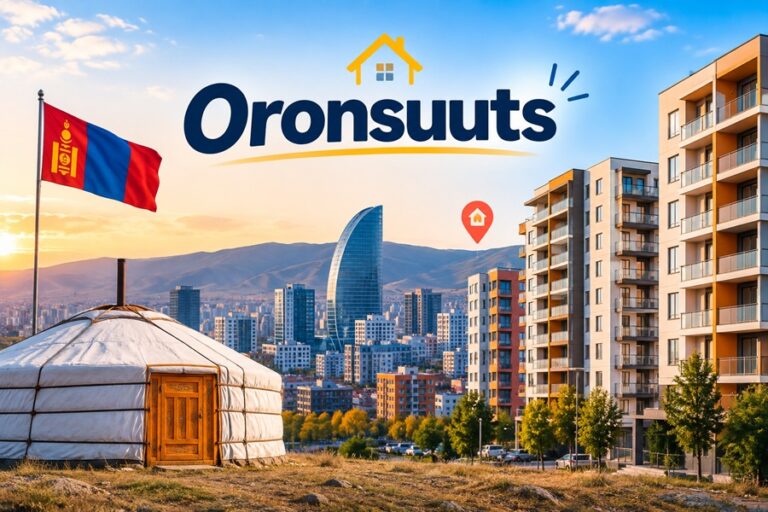
Oronsuuts – written in Mongolian as Орон сууц – translates to “residential housing.” That’s it. No hidden philosophy, no business framework buried underneath. It’s the everyday word Mongolians use when they’re talking about apartments, homes, or organized city housing. If someone in Ulaanbaatar says they’re looking for oronsuuts, they mean exactly what it sounds like: they’re apartment hunting.
I want to be blunt about this because a handful of articles online describe oronsuuts as some kind of “quiet framework for founders” or a “modern digital mindset.” None of that traces back to any actual Mongolian usage of the word. It reads like generic self-help content that latched onto an unfamiliar term simply because search results for it weren’t crowded yet. We’ll get into why that keeps happening a bit further down, but for now – just know the real definition is housing, plain and simple.
Where the Word Actually Comes From
Oronsuuts is a compound term with Mongolian roots tied to the ideas of “place” and “dwelling.” Its meaning has shifted over time, tracking almost exactly with how Mongolian housing itself evolved – from mobile, quickly assembled shelters built for a nomadic lifestyle, to the fixed apartment buildings you’d find in Mongolia’s cities today.
That backstory actually matters, because it’s part of why the word carries more weight than a bare translation suggests. Traditional Mongolian housing wasn’t designed to be permanent. Herding families moved with their livestock across the steppe depending on the season, and their homes had to move with them – built from materials that were local, lightweight, and easy to pack up: felt, wood, animal hides. These weren’t just places to sleep, either. They doubled as gathering spots for rituals and celebrations, which tells you something about how deeply community was baked into Mongolian housing from the start.
As Mongolia urbanized, particularly through the twentieth century, that nomadic tradition gradually gave way to permanent buildings in cities like Ulaanbaatar. The word oronsuuts followed right along with that shift – expanding from describing traditional dwellings to covering the apartment blocks that define urban Mongolia now.
What Oronsuuts Looks Like Today
Ask a Mongolian what oronsuuts means today, and you’ll get apartment-style housing, almost every time. These buildings usually come with shared infrastructure – centralized heating, common water systems, maintained shared spaces – which is really the whole point. An oronsuut isn’t just your unit behind a locked door. It’s part of a bigger building where you’re sharing systems and, often, a genuine sense of community with your neighbors.
That’s worth sitting with for a second, because it’s not just a technicality. The communal thread running through oronsuuts today is basically a continuation of the same value that shaped the old nomadic housing – just expressed through concrete and shared heating pipes instead of felt tents and open gathering circles.
For younger professionals and growing families, oronsuuts offers an accessible way to live in Ulaanbaatar. Residents do not need to build or maintain a standalone home from scratch. Mongolia has urbanized rapidly over the past few decades. As a result, apartment living has become a common choice for many people. This is especially true compared with less formal housing options on the city’s outskirts.
Oronsuuts Compared to Ger Districts
Here’s where the word really earns its cultural weight, so bear with me.
Around Ulaanbaatar, you’ll find ger districts. These areas still use traditional round felt tents called gers as permanent or semi-permanent homes. They often lack the infrastructure found in apartment buildings.
Many ger districts grew as rural families moved to the city. They came in search of better jobs, schools, and healthcare. However, many did not have immediate access to formal housing. A lot of them ended up settling on the city’s outskirts in ger districts instead.
Life there can be genuinely harder than in an oronsuuts apartment. Heating, clean water, waste management – all of it tends to be less consistent, and that’s a real problem during Mongolian winters, which routinely drop well below freezing for months at a stretch. Oronsuuts apartments, by comparison, generally come with centralized heating and organized utilities baked in, which is a meaningful quality-of-life jump for anyone able to make that move.
This is really why oronsuuts matters beyond just being a vocabulary word. It’s tangled up with public health, affordability, and the bigger question of how a fast-urbanizing country actually houses a growing city population without leaving people behind in the process.
Why the Internet Keeps Getting This Word Wrong
If you found an article describing oronsuuts as a business philosophy, you may have come across a common pattern with unfamiliar foreign words. Oronsuuts is not widely known in English. It also does not have a competing definition that dominates search results. This makes it an easy target for unrelated content.
Some recent articles give oronsuuts vague and abstract meanings. They describe it as “structured simplicity” or a framework for “modern digital thinking.” However, these meanings are not based on documented Mongolian usage. Instead, they resemble generic business or self-help content built around an unfamiliar keyword.
If you want to understand the word, focus on its real context. This may include Mongolian culture, housing policy, or life in Ulaanbaatar. Reliable sources describe oronsuuts in relation to apartment-style residential housing. The term also connects with Mongolia’s transition from nomadic life to urban living.Anything framing it as a productivity concept or business trend is almost certainly disconnected from what the word actually means.
Why This Word Matters Beyond Housing
It is tempting to see oronsuuts as just a vocabulary term. However, it connects to bigger themes in Mongolia.
The word reflects Mongolia’s shift from a historically nomadic society to an increasingly urban one. This change happened relatively quickly. For centuries, herding traditions shaped everyday Mongolian life.
The meaning of oronsuuts follows a similar path. It connects traditional portable dwellings with modern fixed apartment buildings. These changes reflect Mongolia’s move toward urban living.
It also connects to ongoing conversations about housing affordability and urban planning. As more people move to cities for better opportunities, demand for oronsuuts-style housing continues to grow. This demand affects construction trends and government housing policy. Understanding this word offers a small window into Mongolia’s urban challenges. The country is dealing with many of the same pressures seen in rapidly growing cities worldwide.
There is also a cultural side to oronsuuts. It is easy to miss if you only view the term as real estate language. The physical structures have changed greatly over time. Traditional felt gers have been replaced by concrete apartment blocks in many urban areas. However, the value of shared and community-focused living has remained. Oronsuuts buildings can function as small communities. In some ways, they reflect the spirit of Mongolian housing traditions that existed long before modern apartments.
The History Behind Traditional Mongolian Housing
Going further back helps explain why oronsuuts carries the meaning it does today.
For centuries, Mongolia’s population was overwhelmingly nomadic, following livestock herds across huge stretches of steppe depending on the season. Housing had to match that lifestyle completely – light, quick to assemble, easy to transport. That’s where the ger comes in, the traditional round felt tent most people picture when they think of Mongolia. Gers were built almost entirely from local materials: wooden frames, felt made from sheep’s wool, animal hides for insulation.
These weren’t crude or temporary in any real sense, either. Gers were genuinely well-engineered for their purpose — sturdy enough to handle brutal Mongolian winters, yet light enough to pack up and move within hours when a family needed to relocate. Beyond the practical side, they also served as social and spiritual hubs, hosting family gatherings and seasonal celebrations. Housing in this tradition was never separate from community life – the two were basically the same thing.
As Mongolia’s political and economic landscape shifted through the twentieth century, permanent urban settlements started growing, and a new kind of housing need came with them. Fixed apartment buildings offered something gers simply couldn’t: standardized infrastructure for a population that was settling down rather than moving with the seasons. Oronsuuts grew to describe that new chapter while still carrying the communal values baked into the older tradition.
Gers haven’t disappeared, by the way. Plenty of Mongolians, especially in ger districts around Ulaanbaatar, still live in them – by choice, tradition, or necessity. But oronsuuts represents the direction Mongolia’s housing landscape has been steadily moving, especially as urbanization keeps accelerating.
What to Know If You’re Actually Looking for Oronsuuts
If you’re an expat, a researcher, or genuinely planning to look into Mongolian housing rather than just reading about it out of curiosity, here are a few practical things worth knowing.
Buildings described as oronsuuts vary a lot in age, quality, and amenities. Newer developments, especially in central Ulaanbaatar, tend to have more reliable heating, better insulation, and modern building management. Older Soviet-era apartment blocks – still common across the city – can be more basic, though usually cheaper.
Centralized heating is one of the biggest practical differences between oronsuuts apartments and ger district housing, and it’s not a minor comfort issue given how severe Mongolian winters get. Temperatures in Ulaanbaatar regularly plunge well below freezing for months, so reliable heating is closer to a basic necessity than a nice-to-have.
Location matters more here than in a lot of cities, partly because of Ulaanbaatar’s notorious air pollution, which tends to be worse near ger districts where coal burning for heat is more common. Oronsuuts apartments in central, well-serviced parts of the city usually mean somewhat better air quality along with easier access to transport and daily amenities.
If you’re unfamiliar with the local rental or buying process, working with someone who actually understands the local housing market is a genuinely smart move – building quality and pricing can vary a surprising amount even between developments that look similar from the outside.
Mistakes People Keep Making With This Word
A few misunderstandings show up again and again whenever this term comes up, so let’s clear them out directly.
The first is assuming oronsuuts means a single standalone house. It doesn’t, really – it’s specifically tied to shared apartment buildings with communal infrastructure, not detached homes. That distinction matters if you’re researching Mongolian real estate seriously.
The second is treating the “business framework” interpretations floating around online as legitimate alternatives. They’re not rooted in any documented linguistic or cultural usage, and leaning on them will leave you with a genuinely wrong understanding of what the word describes.
The third is stopping at the dictionary-level translation – “apartment” – and missing the deeper thread connecting it to Mongolia’s nomadic history and ongoing urban transformation. That context is basically why the word carries the weight it does; without it, you’re just left with a flat, incomplete definition.
A Quick Note on Spelling Variations
One last thing worth mentioning: because oronsuuts is transliterated from Cyrillic Mongolian script, you’ll sometimes see it written slightly differently – “oron suuts” as two words, or with small letter variations depending on how the transliteration was handled. All of these point to the same underlying term, Орон сууц, so don’t assume you’ve stumbled onto a different concept just because the spacing looks off between sources. If the surrounding content is talking about Mongolian housing, apartments, or Ulaanbaatar, you’re almost certainly looking at the right word.
Oronsuuts and Ulaanbaatar’s Rapid Growth
It’s worth pausing on just how fast this shift has actually happened, because the scale of it is easy to underestimate. Ulaanbaatar now holds close to half of Mongolia’s entire population – a staggering concentration for a country that, for most of its history, had no cities of comparable size at all. That kind of growth doesn’t happen quietly, and housing has been right at the center of it.
New oronsuuts developments keep going up around the city’s edges, often expanding into areas that used to be ger districts or empty land entirely. Construction hasn’t always kept pace with demand, though, which is part of why housing affordability keeps coming up in conversations about Mongolia’s urban future. Prices in central Ulaanbaatar have climbed noticeably over the past decade, pushing a lot of newcomers toward outer districts or older buildings simply because that’s what fits their budget.
This is also where oronsuuts intersects with infrastructure planning more broadly. Every new apartment building means more demand on heating systems, water supply, and roads – systems that were largely designed for a much smaller city a few decades ago. Mongolia’s government has been investing in expanding that infrastructure, but the pace of urban migration has, in many cases, outstripped it. That tension is part of the reason discussions about oronsuuts rarely stay purely about housing for long; they tend to spill into questions about city planning, pollution, and public services almost immediately.
None of this is unique to Mongolia, honestly. Fast-growing cities everywhere run into similar growing pains. What makes Ulaanbaatar’s case distinct is how recent and compressed the transition has been – going from a largely nomadic population to one of the most rapidly urbanizing capitals in the world within just a couple of generations, with oronsuuts sitting right at the center of that story.
FAQAs
What does oronsuuts mean in English?
It translates to “residential housing” and is the standard word Mongolians use for apartment-style living.
Is oronsuuts the same as a house?
Not exactly. It usually refers to apartment buildings with shared infrastructure like heating and water, rather than standalone single-family homes.
Where does the word oronsuuts come from?
It comes from Mongolian roots tied to “place” and “dwelling,” with its meaning evolving alongside Mongolia’s shift from nomadic to urban housing.
Why do some articles describe oronsuuts as a business or digital concept?
Those interpretations aren’t tied to the word’s actual Mongolian usage. They look like generic content built around an unfamiliar term rather than accurate cultural explanations.
Are ger districts and oronsuuts the same thing?
No. Ger districts are areas where traditional felt tents serve as housing, usually without centralized infrastructure. Oronsuuts specifically means apartment-style buildings with shared services.
Is oronsuuts housing expensive in Mongolia?
It varies a lot. Older Soviet-era blocks tend to be more affordable, while newer developments in central Ulaanbaatar cost more thanks to better infrastructure and location.
Bottom Line
Oronsuuts is a pretty simple word once you strip away the unrelated interpretations floating around online. It means residential housing in Mongolian, specifically the apartment-style living that’s become central to life in Ulaanbaatar and other growing Mongolian cities. Its roots go back to a nomadic housing tradition built around community and shared resources – values that still show up in how oronsuuts buildings function today, even though the structures themselves look nothing like the felt dwellings of the past.
Mongolia hasn’t really abandoned its nomadic heritage so much as translated it into a new physical form, one apartment building at a time. So next time you run into the word oronsuuts – whether it’s in a housing listing, a news piece about Ulaanbaatar’s growth, or just a random search result – you’ll know exactly what it’s describing. And, just as usefully, you’ll know what it isn’t.