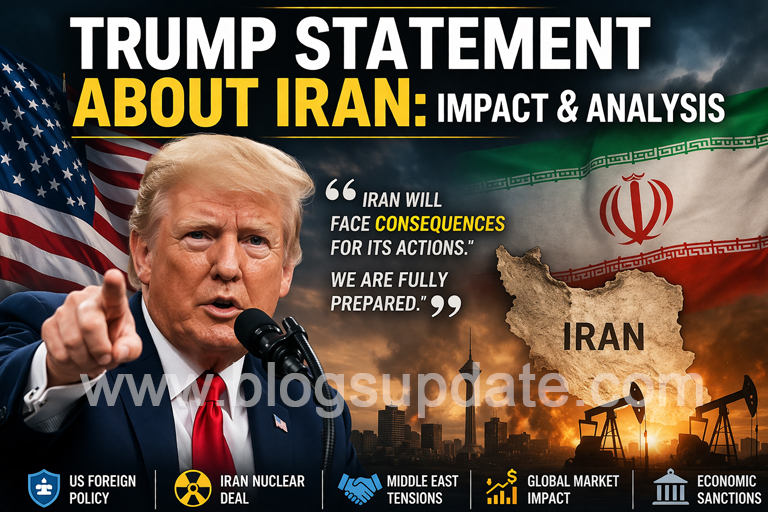
In recent years, any Trump statement about Iran has quickly become global news. Whether it’s a speech, a tweet, or a press conference, the words of Donald Trump regarding Iran carry serious weight. These statements influence not only U.S. foreign policy but also international relations, oil markets, and regional stability in the Middle East.
In this detailed guide, we’ll break down what Trump has said about Iran, why it matters, and what it means for the future—using simple language, real-world examples, and expert-level insights.
Understanding the Context Behind Trump’s Statements
Before diving into specific remarks, it’s important to understand the background.
The relationship between the United States and Iran has been tense for decades. Issues include:
- Nuclear weapons concerns
- Economic sanctions
- Regional conflicts in the Middle East
- Support for proxy groups
When Trump was president (2017–2021), he took a much tougher stance compared to previous administrations.
Major Trump Statements About Iran
1. “Maximum Pressure” Strategy
Trump repeatedly emphasized a “maximum pressure” campaign against Iran.
What this meant:
- Strict economic sanctions
- Limiting Iran’s oil exports
- Isolating Iran globally
Real-life Example:
After sanctions were reimposed, Iran’s economy faced:
- High inflation
- Currency devaluation
- Reduced international trade
2. Military Warnings and Strong Language
Trump often used direct and strong statements, warning Iran against aggression.
Example tone:
- “Iran will face consequences”
- “We are fully prepared”
These statements increased global attention and sometimes raised fears of military conflict.
3. Statements After Key Events
One of the most significant moments came after the killing of Iranian General Qasem Soleimani.
Trump’s stance:
- Justified the action as necessary for U.S. security
- Warned Iran not to retaliate
Impact:
- Increased tensions in the Middle East
- Global oil prices briefly surged
Timeline of Key Trump Statements About Iran
| Year | Statement/Action | Impact |
| 2018 | Exit from Iran Nuclear Deal | Global political shift |
| 2019 | Increased sanctions | Economic pressure on Iran |
| 2020 | Soleimani strike statement | Military tension peak |
| 2020+ | Continued warnings | Ongoing geopolitical tension |
Why Trump’s Statements About Iran Matter
1. Global Security
Statements from a U.S. president can:
- Influence military decisions
- Affect alliances
- Trigger diplomatic responses
2. Economic Impact
Even a single statement can:
- Affect oil prices
- Influence global markets
- Impact trade routes
3. Regional Stability
Countries in the Middle East closely monitor U.S.-Iran relations.
LSI Keywords: geopolitical tension, global markets, oil prices, military strategy
Real-Life Example: Oil Market Reaction
When Trump made strong statements about Iran in 2019:
- Oil prices increased due to fear of supply disruption
- Investors reacted quickly
- Shipping routes in the Persian Gulf were considered at risk
This shows how words alone can influence global economics.
Pros and Cons of Trump’s Iran Strategy
Pros
- Strong stance deterred some aggressive actions
- Increased pressure on Iran’s economy
- Gained support from some U.S. allies
Cons
- Increased risk of military conflict
- Strained relationships with European allies
- Limited diplomatic dialogue
Comparison: Trump vs Previous U.S. Policy on Iran
| Aspect | Trump Approach | Previous Approach |
| Strategy | Maximum pressure | Diplomacy-focused |
| Nuclear Deal | Withdrawn | Supported |
| Sanctions | Very strict | Moderate |
| Tone | Aggressive | Balanced |
Step-by-Step: How Trump’s Statements Impact Global Politics
1: Statement is Made
Trump delivers a speech, tweet, or press comment.
2: Media Amplification
Global media spreads the statement instantly.
3: Market Reaction
- Oil prices fluctuate
- Stock markets respond
4: Diplomatic Response
- Iran responds officially
- Other countries issue statements
5: Policy or Military Action
In some cases, statements lead to real-world actions.
Key Takeaways from Trump’s Iran Statements
- Words can act as policy signals
- Statements often reflect broader strategic goals
- Global reactions are immediate and significant
Frequently Asked Questions (FAQs)
1. What was Trump’s main policy toward Iran?
Trump followed a maximum pressure strategy, focusing on sanctions and strict measures rather than diplomacy.
2. Why did Trump leave the Iran nuclear deal?
He believed the deal was weak and did not fully prevent Iran from developing nuclear weapons.
3. Did Trump’s statements lead to war?
No full-scale war occurred, but tensions reached very high levels.
4. How did Iran respond to Trump’s statements?
Iran often responded with:
- Strong political statements
- Military warnings
- Strategic regional actions
5. Are Trump’s statements still relevant today?
Yes. They continue to shape:
- U.S.-Iran relations
- Middle East geopolitics
- Global policy discussions
Conclusion: The Real Impact of Trump Statement About Iran
The Trump statement about Iran is more than just political rhetoric—it’s a powerful tool that has shaped global diplomacy, economic trends, and regional stability. Through strong language, strategic pressure, and decisive actions, Donald Trump created a policy approach that continues to influence how the world views Iran today.
For readers, the key lesson is simple: in global politics, words matter. A single statement can move markets, shift alliances, and even bring nations to the brink of conflict. Understanding these statements helps you better grasp how international relations really work.
Don’t miss out on any news—keep in touch for real-time information, visit: blogsupdate